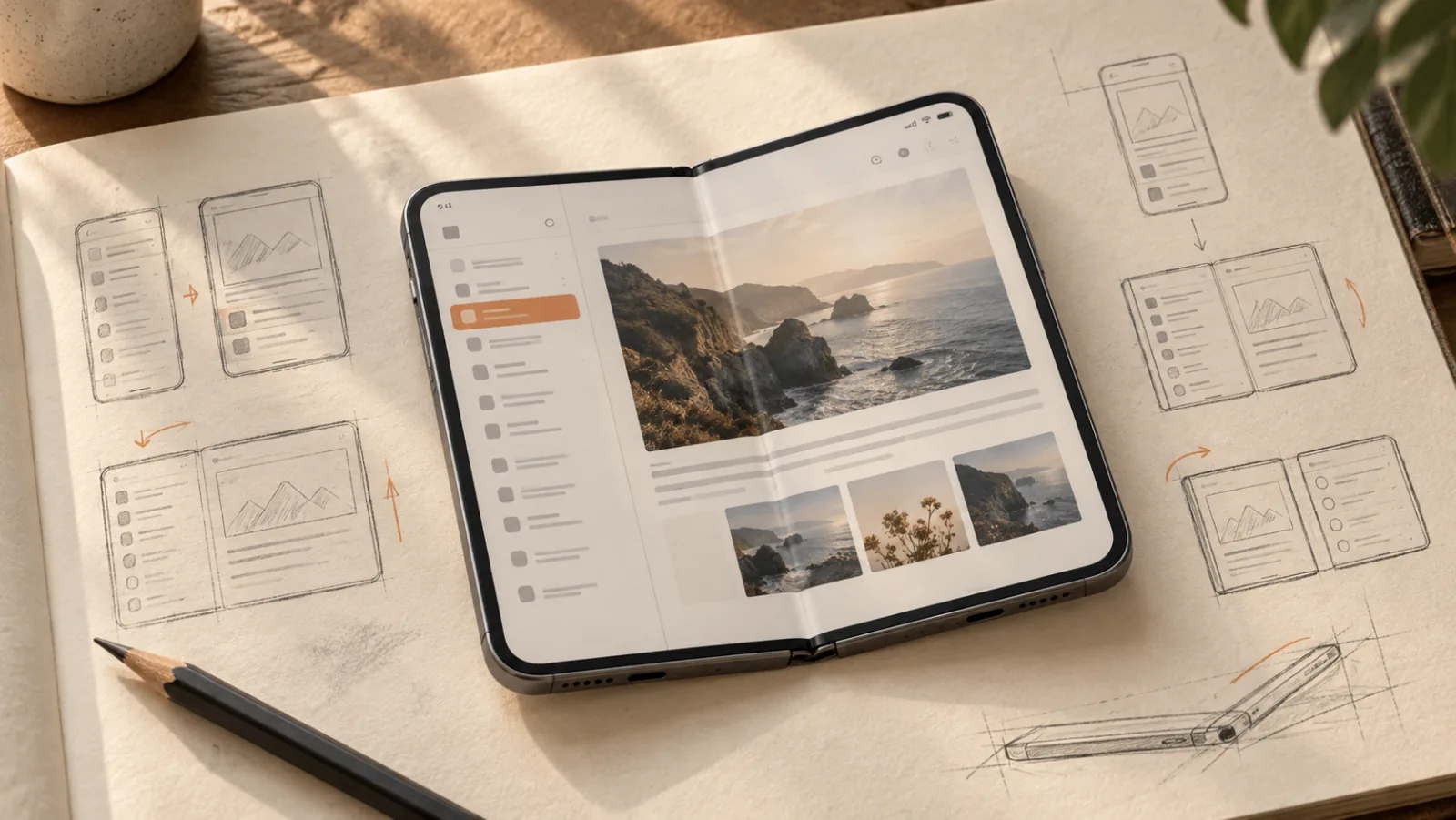
I maintain many apps. Watching Apple’s six iPhone Duo sessions, I kept thinking about how many layouts I’d now have to test.
Closed, open, partially folded, rotated, sharing space with another app. The challenge is making those transitions feel natural while actually using the extra screen. To me, this is one of the biggest changes to iPhone app design in years.
But how many people will use it?
Bloomberg Intelligence estimates around 14 million Duo sales in its first 12 months, equivalent to roughly 6% of an annual iPhone market of 241 million units. These are forecasts, with slightly different reporting periods.
I’m more bullish. I think 6% is achievable, and 10% of new iPhone sales is possible with strong demand and enough supply. That would mean roughly 24 million devices. My optimistic scenario, not the analyst consensus.
Samsung offers an interesting comparison. In 2024, foldables accounted for over 20% of its phone volume above US$1,000. That includes Fold and Flip, and only Samsung’s expensive phones. It doesn’t mean one in five Samsung buyers bought a foldable, but it shows meaningful demand among premium customers.
Price is still a barrier. Duo starts at US$1,999, versus $1,299 for the Pro Max. The $700 difference is substantial, about 54% more. Still, someone already buying a Pro Max might stretch for a noticeably different experience that keeps them in the iPhone ecosystem.
Agentic coding could change the cost of supporting Duo. Apple’s demo shows a wonderfully direct prompt: “Make my app follow all resizability best practices.”

The routine fixes across apps might cost mostly tokens, plus the time to review and test them. That makes even a small market easier to justify supporting. Deciding what deserves the extra screen space still takes design judgment.
If that works.
Even 10% of new sales would initially be a much smaller share of existing users. I’m optimistic about Duo. My maintenance backlog would prefer that I wasn’t.